It was Marc Jacobs who said, “clothes mean nothing until someone lives in them.” And that is precisely the intent of unisex fashion as it begins to accumulate dominance in the industry – to exemplify that clothing’s purpose can only be found when boundaries are pushed and individuals become ignorant towards the traditional constraints of dressing.
In an era where unisex fashion is gaining prominence, Jacobs’ words are useful to understanding that true meaning is found when clothing is viewed beyond its gender label, and used to showcase the unexpected and unconventional. However, as with most topics, fashion’s movement towards genderless fashion, positions it on one side of a very intricate discussion.
Looking to the recent perspectives of human rights activist and American philosopher, Judith Butler, who has entered the gender debate with the publishing of her book, ‘Who’s Afraid of Gender?’, the two sides of the discussion become extremely distinct. The first side is powered by figures such as Pope Francis and Vladimir Putin, who argue that any changes to biologically determined sex is in violation of humanity, interrupting traditional gender roles, while the opposing side argues that challenging gender norms only makes room for societal progress and the flourishing of humanity.
But Butler’s exploration of gender as a phantasm, driven by societal fears and anxieties, reveals the latter side to the discussion. Butler positions herself to argue that the only ‘threat’ of gender theory is social change.
And the fashion industry is in support, taking the stance that gender theory is only threatening to those resistant to change, because really, it’s reflective of contemporary society’s potential to grow. Unlike the views of religious and secular powers, fashion has harnessed the rise of gender theory to create opportunity. The emergence of unisex fashion stands as a symbol of rebellion, where fashion can become more than just a means of expression, but a catalyst for social change, shaping narratives and challenging traditions with every design.
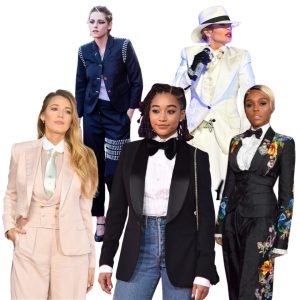
With this, the days of strictly divided fashion are beginning to decline. An industry once only relegated to the realms of ‘men’s’ and ‘women’s’ wear, where women wear dresses and heels, and men wear suits and loafers, is undergoing a change. With the growing visibility and empowerment of LGBTQIA+ individuals, demand for an inclusive fashion industry has skyrocketed – and as within its nature to be on-trend, it makes absolute sense that the fashion industry has embraced androgynous dressing.
Founder and Director of the National Fashion College in Sydney, Bryce Alexander McIntosh believes that “the era of being confined by gender labels or stereotypes is fading into obscurity. Fashion is spearheading this evolution, paving the way for a more inclusive and liberated expression of individuality. Ultimately, fashion serves as a powerful medium for articulating one’s authentic self.”
And that belief is mimicked by individuals emerging into the industry amidst the rise of unisex apparel. Graduate from the Whitehouse Institute of Design, Phillipa Signorelli, expresses her thoughts on the topic.
“As an emerging designer, the rise of gender neutral fashion is a new and exciting movement that challenges conventional fashion and promotes inclusivity,” she says, “fashion should be about self-expression and empowerment.”
But why is the industry so willing to let go of something so traditional and foundational and embrace a completely different culture?
Well Phillipa shares, “there is importance on the fact that everyone has different aesthetics and approaches and regardless of gender identity, people should be able to express themselves however they’d like.”
Really, what use are clothes that are limited by preconceived notions of gender, stereotypical standards or societal constructs? When individuals adhere strictly to traditional norms of dress, garments lose their potential for genuine self-expression, relegating them to mere costumes disconnected from creativity. This movement towards unisex fashion is reflective of fashion’s very roots, setting out to achieve what designers throughout history intended to inspire: liberation from the constraints of societal norms to make meaning from clothing a portray individual expression.
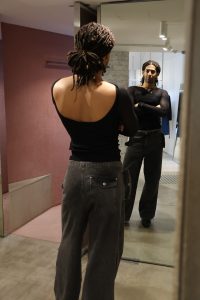
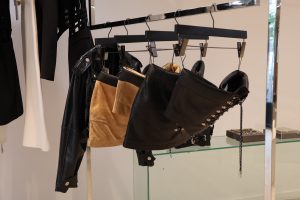
DION LEE SALES ASSISTANT WEARING DION LEE IN PADDINGTON STORE. Photographed by Isabella Stambé.
According to emerging designer, Phillipa, “it is important that all individuals feel as though they are represented in the industry and feel they have places they are able to shop. I feel it’s important for fashion to advance and develop and that genderless lines emerge, however I also think it’s important that gendered fashion also continues to develop as everyone has their own views on fashion.”
So, as the fashion industry undergoes a widespread shift towards unisex apparel, is gendered fashion dead? Is an extinction of traditional fashion in motion as designers begin to rapidly embrace unisex lines and reject the confines of gendered clothing?
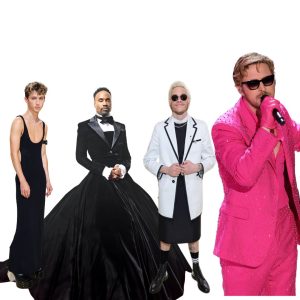
While gendered fashion may not be completely dead, traditional fashion was challenged long before unisex lines emerged. People have been taking part in “cross-dressing” for decades, creating their own renditions of unisex fashion. A DIY alternative if you will. The only new phenomenon is – with the intentional designing of clothing where gender labels are removed and specific stylistic features are added to cater for all shapes and sizes, diverse dressing is offered a place in society, transforming “cross-dressing” from a once-frowned upon act, to one that individuals across the globe are unafraid to take part in. And removal of fear in any situation is always a step in the right direction.
Unisex fashion simply has no restrictions around who wears them or how they are styled. They are blank canvases to which anyone can fashion in their own way. Removing the confines of conventional ‘men’s’ and ‘women’s’ attire, individuals are invited to reimagine and redefine their personal style without constraints. And by providing this limitless realm, unisex clothing stands as a challenge against societal expectations and a passage for reshaping the very essence of fashion, manifesting an era of limitless creativity and individuality that has a place in society.
Phillipa expresses her point of view on the matter, “I don’t necessarily think gendered clothing will become extinct, and don’t think it should, but I feel there will be a significant shift towards more gender-neutral options. This is a positive development, as it allows individuals to express themselves authentically without feeling restricted.”
In an exclusive interview with Australian celebrity stylist, lifestyle blogger and content creator, Jamie Azzopardi, the evolution of gender-neutral is in focus as they share their perspective on its rise. As a prominent individual in the Australian fashion scene and member of the LGTBQA+ community, Jamie shares, “We have certainly come a long way in the industry,” highlighting the importance in “making sure that non binary people as well as drag artists and general cross-dressing individuals as well as those whom choose to simply mix-n-match outfits have pieces to wear in multiple ranges,” adding, “we have really as an industry embraced just how fluid the world is becoming.”
Bryce says his duty “as the owner of Australia’s latest and most sought-after fashion colleges,” is “in championing inclusivity and diversity.” NFC’s role “extends beyond merely educating; we’re sculpting the future vanguards of the fashion realm.” He continues that, “by ingraining a comprehensive culture of inclusivity in our ethos and practices, we empower our students to become trailblazers of diversity. This empowerment resonates as our graduates ascend to prestigious roles within the industry, poised to enlighten successive generations on the paramount importance of diversity and inclusion in the workplace.”
Whereas, Phillipa talks about her role as an up and coming designer, stating that, “emerging designers like myself have a significant impact on shaping the future of fashion towards greater inclusivity. By challenging traditional norms and pushing boundaries, we can inspire larger brands and influence industry standards to be more diverse.
So is it abundantly clear that, from the corridors of fashion colleges to the runways of international luxury brands, an evolution is underway, shifting the fashion industry from traditional gender division to modern gender fluidity.
Australian designer, Dion Lee, is recognised as the main driver in facilitating the emergence of gender-neutral fashion into the industry. With their experimental construction and traditional tailoring, Dion Lee has introduced a world of innovation, where art meets activism, and fashion can be used as a tool for inclusivity, social change and empowerment. Dion Lee’s avant-garde approach to design essentially combines the rising demand for androgyny in fashion with the inherent fluidity of gender expression.
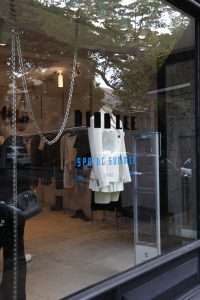
In an interview with Document Journal, Lee provides insights into his personal journey and motivations, revealing his determination to convey balance of masculinity and femininity within his designs. He says, “I was personally fascinated with this idea of balance and this idea of polarity and this idea of masculine versus feminine.”
This strife for balance and equality reflects the core of his aesthetic philosophy. It motivates him to produce clothing that defies categorisation, enables authentic self expression and evokes confidence amongst his consumers.
In a subsequent interview with Vogue, Lee asserts his devotion to redefining the concept of masculinity and femininity in fashion, while also incorporating features of traditional design, saying, “it’s all about this idea of subverting traditional tropes and ideas around gender, and trying to represent that in a really sophisticated way.”
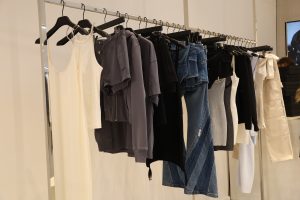
However, it was the debut of deliberate unisex pieces in his Spring/Summer 2020 collection at New York Fashion Week that first introduced his innovative approach to fashion put his name on the map. The designer told The Sydney Morning Herald in an interview that, “alot of women want to wear menswear and vice versa. The idea was to not have such a clear delineation between the sexes as you usually see with fashion.”
Styling pieces such as a pinstripe blazer with shorts, a lingerie corset and sandals, Dion Lee’s 2019 NYFW show stands as a defining moment in fashion history.
When asked to share her thoughts on Dione Lee, Phillipa expressed that, “Dion Lee has set the tone of how unisex fashion can be innovative and aesthetic. His distinct approach in promoting unisex fashion offers an intriguing and inclusive perspective on contemporary style.” She continues, honing in on her personal experiences, “I do have experience in buying from the brand and have found the quality of the clothes to be amazing, having so many intricate details!”
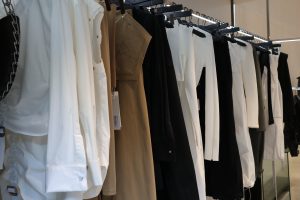
Phillipa touches on his expansion into the international market, offering the perspective that it is “a testament to his meticulous craftsmanship and cutting-edge designs,” she believes, “to be noticed on a global scale has allowed him to participate in international fashion showcases such as NYFW. Being noticed on such a big platform has definitely allowed him to promote unisex fashion on a larger scale.”
It is clear that this is exactly what he achieved.
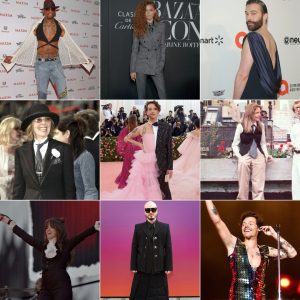
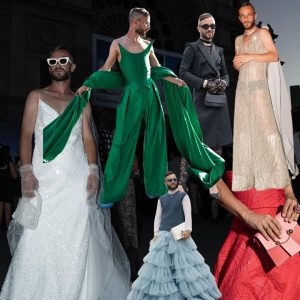
Dion Lee’s success at NYFW has only prompted a chain of followers, with high fashion brands including Gucci, Louis Vuitton, Versace, and Prada tapping into the unisex market and further extending their prominence, relevance and appeal within the industry. In recent collections, these iconic fashion houses have implemented genderless designs, sending the message that they are departing from traditional fashion and moving towards a more diverse and inclusive approach.
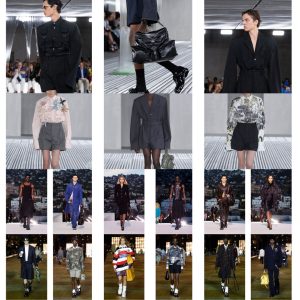
Collage courtesy of Marie Stambè.
The decision of these luxury brands to embrace gender neutrality is not merely a strategic maneuver, but more so a reflection of their dedication to pushing boundaries and challenging tradition. As leaders in the industry, these houses are breaking the constraints of gendered fashion and joining the moment towards a more inclusive and progressive world, where clothing self-expression are limitless.
From the perspective of Bryce, “luxury brands hold immense influence in the fashion world, shaping trends and dictating style narratives,” he deems that “their ability to embrace individuality and blur traditional gender lines has been revolutionary in the industry.”
Credit, however, should be delegated deservingly. Advocates have always possessed the utmost power in spreading new phenomena into society, and the spread of genderless fashion has definitely accelerated via culturally influential figures.
When questioned about gender-neutral fashions biggest advocates, Bryce said, “celebrities embracing non-traditional expressions of fashion isn’t just about staying relevant; it’s a celebration of individuality and inclusivity. Take Harry Styles, for instance. He’s long defied conventional gender norms, paving the way for a more diverse and expressive fashion landscape.” To Bryce, “it’s refreshing to see heterosexual males embracing unisex clothing and even experimenting with nail polish and makeup.”
And Bryce definitely raises a valid point. When it comes to gender-neutral fashion, no one is a better advocate than Harry Styles. Not only has his approach to self-expression through fashion inspired a broader conversation about fashion as a construct to expression of gender fluidity, but his unapologetic fashioning of unisex clothes has challenged the very essence of toxic masculinity, and encouraged individuals worldwide to embrace their authentic selves without fear of judgment or societal constraints.
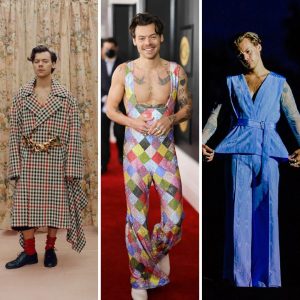
Essentially, he stands as a pivotal figure in fashion’s movement towards gender-neutrality, and in a 2019 interview with The Guardian, he, in his nonchalant manner, expresses his belief that clothing should not be confined by gender norms. He says, “what women wear. What men wear. For me it’s not a question of that,” to him, “the moment you feel more comfortable with yourself, it all becomes a lot easier.”
His candid remarks resonate with the words of Marc Jacobs, both alluding to the idea that meaning is created when the clothing is worn, not when the label is attached. They coherently encourage individuals to embrace their individuality and self-express through whatever means they like.
“When you take away ‘There’s clothes for men and there’s clothes for women,’ once you remove any barriers, obviously you open up the arena in which you can play,” he said. “It’s like anything – anytime you’re putting barriers up in your own life, you’re just limiting yourself.”
So, it’s safe to say that Harry Styles’ influence extends beyond the music industry, standing as one of the utmost influential figures in contemporary fashion. His confident fashioning of bold styles and controversial designs in order to express his individuality instills hope into individuals cautious to embrace authenticity and challenge traditional gender norms. Harry’s embracing of unisex clothing ultimately serves as a reminder of fashion’s power in spreading confidence, and social change.
Kickstarting this change – the emergence of exclusively genderless brands. Bryce says, “Song For The Mute and Nique captivate me with their innovative designs and commitment to pushing boundaries.” But brands such as Charles Jeffrey Loverboy, Harris Reed, Daniel w. Fletcher, Nicopanda, Telfar and Riley Studio are a mere few other brands around the world to look out for amidst this fashion revolution towards global equality and acceptance of gender fluidity.
As we embark on a new era of self-expression and diversity, the rise of genderless fashion brands signifies a departure from traditional binary thinking and a step towards a more inclusive future, with the fashion industry leading the charge.
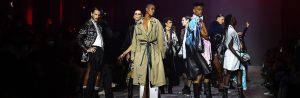
With the lines of gendered fashion blurring, unisex apparel is emerging as a powerful symbol of gender fluidity, challenging societal norms as dictated by religious and secular powers, and reshaping the very essence of the fashion industry as it’s enabling new forms of self-expression in contemporary society.
So, as we draw this discussion to a close, I urge you to consider: Is gendered fashion truly teetering on the brink of extinction, or does the unapologetic ascent of unisex apparel signify merely an evolution within the industry? Are we witnessing the dissolution of traditional labels, paving the way for liberated individual expression?
Or perhaps, in the spirit of Marc Jacobs and other fashion figures alike, can we facilitate a harmonious coexistence where both gendered and unisex fashion thrive, each available to be used at the disposal of anyone desiring to create meaning out of clothing.
Subscribe below so we can serve you the latest in fashion, beauty, lifestyle and culture!
Until we meet again, Ciao Bella xo