Amid the glitz and glamour of haute couture, fashion houses are making it their mission to transform their brands, with iconic brands like Dior and Louis Vuitton reshaping their roles beyond the runway. As societal pressures mount for industries to embrace social responsibility, leading luxury fashion houses are stepping into the spotlight with bold initiatives and meaningful partnerships. But are their moves genuine or simply strategic?
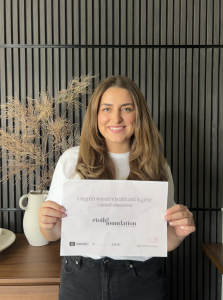
For UNSW law student and co-founder of the Étoile Foundation, Isabella-Elena Carrozzi, sparking change was a no-brainer.
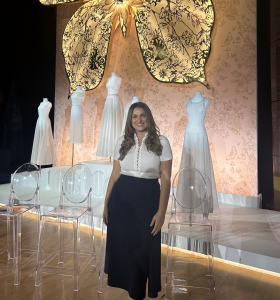
After completing Women@Dior X UNESCO’s mentorship project in Paris, this Sydneywider was inspired to make a difference in the field of period poverty in Côte d’Ivoire, in Africa’s west. With the help of Women@Dior, an international mentoring & educational program that coaches young women all over the world, Carrozzi pinpointed a pressing issue and decided to act on it.
“I expressed my desire to teach menstrual education due to the struggles I faced after I was diagnosed with both Polycystic Ovary Syndrome and Endometriosis,” she said. “I was fortunate enough to have received my endometriosis removal surgery just a year after my diagnosis thanks to my family having great awareness of the illnesses, and private health cover in Australia.” This isn’t the case for everyone. A reality Carrozzi was exposed to after hearing the story of Amina, a young 15 year old girl living in Abidjan, Côte d’Ivoire, in Africa.
“When I spoke to Amina earlier this year, I was absolutely heartbroken to hear that this young, bright girl had been menstruating for three years and had never used a pad,” she said. “She used a cardboard piece from a cereal box. She also missed school for six days every month, as culturally she was taught her period is a curse and she should not be in public when she has her period.”
From this, Étoile was born. Alongside five other program graduates, Carrozzi co-founded The Étoile Foundation, a non-government organisation established in 2023 under the UNESCO and Women@Dior ‘Dream for Change’ Project. Étoile is a start-up committed to promoting the correct teaching of women’s health and hygiene, partnering with local schools and universities in Côte d’Ivoire to create a safe community for women to enhance their knowledge on menstruation, and innovating sustainable period products, all on a global scale.
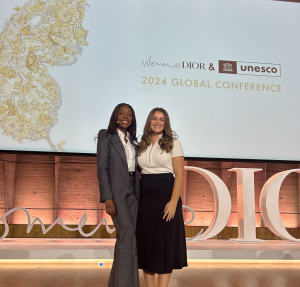
Carrozzi was granted this opportunity by the French luxury fashion Maison, Christian Dior, through their ‘Dream for Change’ project; an endeavour backed by UNESCO, the United Nations Educational, Scientific and Cultural Organisation. The fashion industry, long celebrated for its creativity and innovation, is now at a crossroads.
According to a LinkedIn post in February this year, “changing consumer values are reshaping the fashion landscape,” said American-based B2B trade media company, Fibre2Fashion. “Modern consumers seek brands that align with their ethical and social beliefs, urging the industry to prioritise responsible practices and make a positive impact on society.” Numerous initiatives have emerged to reshape the public perception of luxury fashion houses. Yet, the pivotal question remains: are these efforts driven by genuine commitment to sustainable practices and social responsibility, or are they merely just marketing ploys?
While some companies have made tangible strides towards reducing their environmental impact and improving labour conditions, others seem to prioritise mere recognition over real, meaningful change. A study conducted by Sprout Social, an American social media management agency, found that 70% of consumers believe it’s important for brands to take a public stand on social and political issues.
UNSW Professor Tracy Wilcox, who specialises in corporate social responsibility and ethical leadership, attributes this statistic to “a rise in people’s awareness about the myriad environmental and social crises we are currently facing,” she said. “People are seeing how consumer-focused businesses are contributing to many of these global and local problems, and they want to see these companies playing their part in fixing them.”
Consumers often turn to leading brands, such as fashion giants, Dior, Louis Vuitton and Gucci, to stand up against global issues, because they believe they have the ability, and profit margins to create real change. Brand and messaging strategist Hilary Hartling, told Forbes Magazine in December 2021, “I highly recommend infusing meaning, purpose, and when it makes sense, social values into your brand because consumers are discerning and want to know that the brands they choose share their values.”
55% of global respondents on a NielsenIQ’s corporate social responsibility survey expressed willingness to pay extra for products and services from companies that are committed to positive social and environmental impact. The survey also revealed that social responsibility leads to employee retention, showing that 75% of employees who engage in corporate giving programs tend to stay with the company longer. This is all too true for Carrozzi who, after completing Women@Dior’s program, decided to stay in the fashion industry, completing a Graduate Program with LMVH while abroad, and now working as the head of the Philanthropy and Sustainability committees at Hermès, Australia.
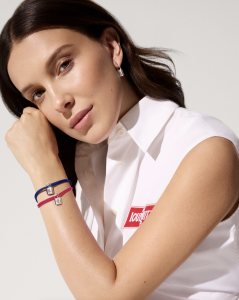
“Employees are the source of innovative solutions to sustainability problems. But it’s difficult to promote social or environmental responsibility if the leadership is single-mindedly focused on the bottom line,” said Professor Wilcox. “It’s not how a company spends its money that makes it socially responsible, it’s how it makes its money.” So, what are these billion-dollar fashion houses focused on? Louis Vuitton has raised $22 million in donations for UNICEF, an agency of the United Nations responsible for providing humanitarian and developmental aid to children worldwide.
Through their #MAKEAPROMISE campaign, Louis Vuitton has launched a Silver Lockit jewellery collection. For every Silver Lockit bracelet sold, $100 to $200 is donated to UNICEF.
Gucci, with their platform ‘Gucci Equilibrium’, is focused on environmental sustainability through the creation of a circular economy. Their objective is simple; to design out waste and pollution by giving their materials a second life. This is a partnership that stands out for Professor Wilcox, as a good example. “The recent awarding of the Ellen Macarthur Foundation’s Award for Circular Economy to Gucci’s circular denim initiatives demonstrates that the company is starting to walk the talk when it comes to sustainability,” Professor Wilcox said.
With Dior, their partnership with UNESCO is a seemingly positive one, changing the lives of young women by instilling courage in them, and empowering them to take initiative on social issues across the globe. Creating change isn’t an easy practice, but “the unique collaboration of a luxury fashion Maison [Dior] with the world’s leading education, science and culture organisation [UNESCO], helped to build us Co-Founders up as entrepreneurs who are able to ‘do it all’,” Carrozzi said.
As for Étoile, Dior’s example of social responsibility sets a precedent for them. From a zero destruction policy, to the use of local products, including fabrics that are 100% organic, sustainable and locally-grown, the organisation is committed to making positive steps forward in terms of women’s hygiene, and social and environmental change. And as a not-for-profit, their motives are genuine, not just another public relations scheme. “We can always be better, and we can always do better to help the lives of those who lack opportunities,” said Carrozzi.
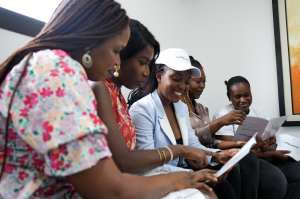
“I am proud of what we do every single day; it is most certainly the thing that gets me up every morning, knowing I am responsible for the menstrual education of these young girls.”
To learn more about The Étoile Foundation and their mission, visit their website.
Information can also be found via their socials @theetoilefoundation.
Subscribe below so we can serve you the latest in fashion, beauty, lifestyle and culture!
Until we meet again, Ciao Bella xo